Gramática

Temas concretos de Gramática: verbos frasales, modales, voz pasiva, etc...

Léxico

Campos léxicos, sinónimos, antónimos, homónimos, falsos amigos, lenguaje tabú y un largo etcétera

Historias y humor

Pequeño cajón desastre para mis historias, anécdotas en mis clases, recuerdos...

Mis libros

Aquí podéis ver un pequeño resumen de mis libros más importantes

Charlas y conferencias

Las más significativas a lo largo de mi vida académica. Y las próximas

Mostrando entradas con la etiqueta recuerdos. Mostrar todas las entradas

1/7/14

The First Heart Transplant

En espera de los resultados finales de las oposiciones, que ojalá sean satisfactorios para vosotros, mis seguidores y amigos, vuelvo de nuevo al blog con mi programa veraniego.
El verano es tiempo de relax y descanso tras un curso movidito, por lo tanto, mis posts durante los dos siguientes meses incluirán fundamentalmente material más light, como historias, humor, etc, dejando los más académicos, como gramática, fonética y léxico para una nueva etapa que pretendo iniciar a mediados del mes de septiembre. Subiré también todos los martes, empezando el próximo día 8, hasta el 9 de septiembre, una serie de cuentos y fábulas infantiles, que los padres y abuelos puedan poner a sus peques para que vayan haciendo el oído al inglés y aprendiendo algunas palabras. 

Empiezo la temporada de verano compartiendo hoy con vosotros la primera historia que me publicó Sur in English, sobre finales de 1988, creo recordar. Cuando escribí este pequeño relato, el racismo imperaba aún en South Africa, pero en la actualidad, afortunadamente, gracias al inolvidable Mandela, este racismo forma ya parte del pasado....o casi:


THE FIRST HEART TRANSPLANT
           
It had been that very morning, the eve of his 27th anniversary, at the small cemetery (only for black people) of his native town that he had heard the words “heart transplant” for the first time. He had been looking with vacant eyes at the humble coffin being lowered to the grave, when he had overheard those two men, vague acquaintances of his, mention that the operation had been a great success the day before at the town hospital. He did not understand at first. He felt that odd sensation one has when one suddenly awakes from a bad dream or rather, a frightful nightmare...
            That is why it was such a terrible shock for him to realize that it was his own burial. The body in the hearse was his, and that poor black girl in front of him, concealing her tears behind a frayed veil was his own wife. He had felt a sudden impulse to rush to her, take her in her arms and..., it had all been so sudden, the car accident had left him no time to tell her how much he loved her and how grateful he was for the happy moments she had given him..., but no movement came from his limbs. He was dead.
            Now, in this drowsy summer afternoon, looking through the window of that big, modern hospital (only for white people), he felt a little uneasy. He knew, of course, that men of his race were not welcome in this place, but he had wished to cast a glance on that fat, white man there, lying in his bed, peacefully smiling at a solicitous doctor and a pretty nurse at his side. He was a perfect stranger to him, but it was his heart beating in that chest, of that he was sure...
            He had been taught to distrust white people, to hate them even, and as he stood there gazing at that pale, flabby man, he could not help thinking with bitterness of the ordeal his poor black heart would have to endure. Through that white body he would have to love a white woman, white children perhaps, and live separated from the ones he really cared for. But oddly enough, he felt his anger recede, giving way to a new, unknown emotion, until at last he was happy as a child. He thought his involuntary donation might lead sometime to a greater love and respect for the brothers of his race, and it seemed to him as if he had been born again...

            He knew they were waiting for him above and he had a large account to settle..., but it was full of a new hope that he started off for his last journey.

28/3/14

Notes for a brief History of English Lexicography

Mi post de hoy va dedicado con nostalgia a mis querido alumnos de Lexicografía Inglesa, hasta el curso 2011-12, año en el que la asignatura dejó de impartirse, por haber sido excluida incomprensiblemente del Plan de Bolonia.


NOTES FOR A BRIEF HISTORY OF ENGLISH LEXICOGRAPHY

Introduction

The earliest ‘list of words’ that might be said to constitute the beginnings of English lexicography were the glossaries of Anglo-Saxon priests and schoolteachers, compiled to enable those who didn’t know Latin to read Latin manuscripts (English lexicography is generally accepted as beginning sometime around the early eighth century). These glossaries then were essentially lists of Latin words with English glosses. Then in the 15th c., following the revival of classic learning and literature, we also find the opposite: English-Latin, to enable learners to master Latin.
It isn’t until the beginning of the 17th c. that we find the first English-English Dictionary: Robert Cawdrey’s A Table Alphabetical.... But in Cawdrey’s Dictionary we find only the ‘hard words’, that is words borrowed from the Hebrew, Greek, Latin or French. These Dictionaries of hard words continue to appear throughout the 17th c. and then at the beginning of the 18th c. the first English-English dictionary was published containing not only the ‘hard words’ but all the common English words.

English Dictionaries before Samuel Johnson

15th century

1440.- Promptorium parvulorum sive clericorum (a treasure or store-house for the young or for clerks).
It’s an English-Latin dictionary, first English, then several Latin equivalents.
Attributed to Galfridus Grammaticus (Geoffrey the Grammarian), a Dominican monk in Norfolk.
Printed in 1499 (printing was introduced in England in 1476). It contains 12.000 entries. Written in the dialect of East Anglia.

16th century

1538.- Sir Thomas Elyot’s Dictionarie (a Latin-English dictionary). First to use the word ‘dictionary’.

17th century

1604.- Robert Cawdrey’s A table Alphabeticall containing and teaching the true meaning and understanding of hard English wordes, borrowed from the Hebrew, Greek, Latin, or French and &. With the interpretation thereof by plaine English wordes, gathered for the benefit of Ladies, Gentlewomen, or any other unskilfull persons.
Generally considered the first English-English dictionary.
It’s a dictionary of hard words and contains 2.500 entries.

18th century

1702.- J.K’s A New English Dictionary (J.K. believed to be the initials of John Kersey, because he’s the author of other dictionaries of about the same time).
First English Dictionary to include common words as well as ‘hard’ ones (28.000 entries).

1730.- Nathan Bailey’s Dictionarium Britannicum (48.000 entries).
Used by Samuel Johnson as a working base for his own dictionary.


Samuel Johnson

Biography: Important dates


1709.- September, 18th; born at Lichfield, near Birmingham, the son of a bookseller of that town.

1728-29.- educated at Grammar School (Lichfield) and later at Pembroke College, Oxford, but took no degree. Of his schoolmaster at Lichfield he commented later in one of his letters that he whipped the boys severely “to save them from the gallows”.

1731.- his father dies, leaving his family in poverty.

1735.- marries Mrs Elizabeth Porter, a widow, considerably older than himself. She brought with her a dowry of ₤700, which he probably used to set up a private school at Edial, near Lichfield, which was not successful. She and her husband had a sincere admiration for each other, and it seems he sincerely loved her.

1746.- signs contract with a group of booksellers to write a Dictionary of the English Language.

1747.- publishes his Plan of a Dictionary of the English Language, addressed to Philip Dormer, Earl of Chesterfield, who awarded him ₤10.

1750.- starts The Rambler, a periodical written almost entirely by himself, which ran for two years, till 1752. Here and later in The Idler he shows himself as a moralist and a social reformer, opposing death penalty for robbery, war and colonialism. His essays were greatly admired by his wife.

1752.- wife dies.

1755.- April, 15th, his A Dictionary of the English Language is published in 2 volumes.

1756.- an abridged edition of his Dictionary is published.

1762.- the King George III confers on him an annual pension of ₤300. He doubted whether it would be decent to accept it, considering he had defined ‘pension’ in his Dictionary as “pay given to a state hireling for treasons to his country”, but his friends, the famous painter Joshua Reynolds among them, persuaded him to accept it.

1763.- May, 16th, he meets James Boswell in the back parlour of Thomas Davies’ bookshop. Boswell, who was 31 years younger than Samuel, was to become his biographer.

1765.- his edition of Shakespeare, in 8 vols., is published.

1784.- December, 13th, he dies, and a week later is buried in Westminster Abbey. A monument was erected to him in St. Paul’s.

1791.- The Life of Samuel by James Boswell is published. It is generally regarded as the best English biography of all times.

Samuel Johnson’s A Dictionary of the English Language


- First published in 2 vols. on 15th April, 1755, addressed to Philip Dormer, Earl of Chesterfield.

- based on Bailey’s Dictionarium Britannicum of 1730.

- 40.000 headwords and 116.000 quotations

- famous for its quotations, etymologies and definitions, though some etymologies and some definitions were wrong.

- in his Plan he stated that he proposed to show the history of every word (“the reader will be informed of the gradual changes of the language, and have before his eyes the rise of some words and the fall of others”, but he never did this. This task was undertaken later on by the New English Dictionary on Historical Principles lexicographers led by Murray.

- pronunciation: he shows only the stress, but sometimes indicates it by citing a word with the same vowel quality.

- printed, with some changes, five times in Johnson’s life, and many others after his death, until 1827.

The Philological Society and the Genesis of The New English Dictionary on Historical Principles

On May 18th, 1842, a meeting of clergymen, philologists, academics and etymologists was held in London, and they founded the Philological Society, “for the investigation of the Structure, the Affinities and the History of Languages” (comparative philology).

On June, 18th 1857, the Philological Society decided that it was necessary to update past dictionaries (Johnson’s A Dictionary of the English Language and Richardson’s A New Dictionary of the English Language, published in 1837) and accommodate their etymologies to the new philological principles. The Philological Society appointed three of its members: Trench, Coleridge and Furnivall as an “Unregistered Words Committee” whose task was to amass “words and idioms formerly unregistered in any dictionary”, with the purpose of publishing a Supplement to existing works.

But in November that same year, following Trench’s paper “On some Deficiencies in Our English Dictionaries”, the Philological Society changed its mind and decided to publish a New Dictionary of English, and thus the project for the greatest English dictionary of all times was born. The Society decided to convert The Unregistered Words Committee into a ‘Literary Historical Committee’, with the purpose this time of preparing a New English Dictionary, an Historical Dictionary. They also commissioned them to try and find a potential printer, and after several failed approaches to various publishers (MacMillan among them), Furnivall finalled managed to persuade Oxford University Press to accept to undertake the publication of the future Dictionary.

Little progress was made by these three first editors. Trench soon returned to his ecclesiastical duties, Coleridge died very young and Furnivall had many other concerns to see to, so he advertised for the job of editor and finally James Murray, a teacher at Mill Hill School in North London and a member of the Philological Society accepted and in 1878, he was officially appointed editor.

James A.H. Murray


He’s the main editor of The New English Dictionary on Historical Principles, later re-titled The Oxford English Dictionary (OED).
He was born near Hawick, S.E. Scotland on February, 17th, 1837, the son of Thomas Murray, a clothier, and he died in his Oxford home on July, 26th, 1915.
At the age of 17, he became a master at Hawick Grammar School; in 1870 he joined Mill Hill School as a master and in 1873, he graduated BA from London university.
He married twice; first in 1862, but his wife died two years later, though he had moved to the supposedly warmer climate of London. In 1867, he married again, and his new wife, Ada, gave him 11 children, 6 sons and 5 daughters.
In 1878, he was appointed editor of The New English Dictionary and his new job took over so much of his time that he was forced reluctantly to abandon his teaching and move to Oxford, where all his children enthusiastically helped him sort out the slips in the ‘Scriptorium’, known by the family as ‘the Scrippy, a shed he had built in the back garden of his house.
He was a very religious man (in the Congregationalist creed) and found in his religion the justification for a life of dedicated work, since for him, to learn and to spread that learning was to serve God.
He had a working knowledge of many languages, living and dead, which he learnt reading the Bible in each language.
Aside from his work on the Dictionary, he found time to be a deacon of his chapel in Oxford, to garden, to cycle, to collect stamps, etc.
Murray died before the Dictionary was completed, but his prestige was and is immense, and he was fully satisfied of what he had achieved.

The New English Dictionary on Historical Principles later re-titled The Oxford English Dictionary (OED)


It began to appear in fascicles and the first one came out in 1884. Later the fascicles were collected in volumes, and the 10th and last volume was published in 1928, 13 years after Murray’s death.
Its main editor was James Murray, who began his work in 1878, but later some other assistant-editors were appointed to help him: Henry Bradley, author of the famous Dictionary of Place Names, joined in 1888; William Craigie, in 1901, and Charles Onion, author of The Oxford Dictionary of English Etymology, in 1914.
The Dictionary’s first edition had 240.000 entries.
In 1933, a new edition, re-titled The Oxford English Dictionary (OED) in 12 volumes plus a Supplement was published, edited by Robert Burchfield. It contained 252.259 entries.
In 1989, the 2nd edition of the OED, in 20 volumes, edited by John Simpson and E.S.C. Weiner, was published. This edition contained 290.500 entries and 2.412.400 quotations

AMERICAN DICTIONARIES AND LEXICOGRAPHERS


The earliest dictionaries to appear in independent America (since 1776) were dictionaries imported from England, mainly spelling and pronouncing dictionaries: Samuel Johnson’s Dictionary, Walker’s Critical Pronouncing Dictionary, John Entick’s New Spelling Dictionary of the English Language, etc.

The main American lexicographers are Noah Webster and Joseph Worcester.

Noah Webster


Noah Webster was born on October 16th, 1758 in West Hartford, Connecticut.
Webster worked on his father’s farm until he was fourteen, then he attended local school, and in 1774 he entered Yale, where he learnt Latin, Greek and Hebrew, and graduated when he was 20.
He then went into teaching and to remedy the deficiencies he had noticed in his students he wrote his first work: A Grammatical Institute of the English Language. It consisted of three parts: a spelling book, a grammar and a reader. The spelling book was a great success, and re-titled Elementary Spelling Book, it was adopted as a universal textbook in American schools. Called ‘the blue-backed speller’, it sold more than 30.000.000 copies.
He wanted to reform American spelling, and he’s responsible for the exclusion of some superfluous letters, for instance the ‘u’ in words ending in ‘our’: colour, favour, honour, etc. became in American spelling color, favor, honor, etc.
His first full-scale lexicographic work is Compendious Dictionary of the English Dictionary, published in 1806. It contained 40.600 headwords.
In 1810, Webster announced his project to make an all-American dictionary in his Prospectus of a New and Complete Dictionary of the English Language. The Dictionary, titled American Dictionary of the English Language was published in 1828 in two volumes, with 70.000 headwords. Webster’s Dictionary has been criticized, especially his etymologies. His many errors sprang mainly from his strong religious convictions (he did not question anything the Bible says) and from his ignorance of Anglo-Saxon, the language which really is at the root of so many English words. Fortunately, his etymologies were put right in 1864, thanks to the German scholar C.A.F. Mahn, who had been commissioned by G & C Merriam, Webster’s dictionaries publishing company.
Webster died on May 28th, 1843, aged 84.
Webster’s Dictionary, duly updated, is still published in America, where the name Webster is synonymous with dictionary.

Joseph E. Worcester


Joseph Emerson Worcester was Webster’s great rival.
He was born in Bedford, New Hampshire, on August 24th, 1784.
Like Webster, he worked on his father’s farm, but he did not attend school until he was 21, because his father, a strict Calvinist, did not allow any of his 14 sons and daughters to leave the farm till they reached that age. So, when he was 21, Worcester went to a school where most of his classmates were aged nine. He left after four years and then entered Yale, where he graduated in 1811.
Worcester’s first lexicographical work was his edition of a popular dictionary: Johnson’s English Dictionary as Improved by Todd and Abridged by Chalmers, with Walker’s Pronouncing Dictionary Combined, published in 1827.
In 1829, he abridged Webster’s Dictionary, presumably by an amicable arrangement, but he cut down Webster’s definitions and he ignored all but the most important etymologies and citations, so Webster was not pleased and accused Worcester of tampering with his text.
In 1830, Worcester had his Comprehensive, Pronouncing and Explanatory Dictionary published, and Webster accused him of plagiarism, of having purloined 121 of his definitions. Worcester replied that he had started working on his Dictionary long before he began his abridgement of Webster’s, and he gave the sources from which he had taken those 121 definitions. This is what is known as ‘the war of the dictionaries’.
In 1860, Worcester published his last and best work: A Universal and Critical Dictionary of the English Language, containing 132.406 entries.
Worcester’s dictionaries were very famous during his lifetime and rivalled with Webster’s in the public’s favour, but since 1864, after Mahn’s revision of Webster came out Worcester’s dictionaries fell in oblivion.
He died on October 27th, 1865, in Cambridge, Massachusetts.

CANT, SLANG AND TABOO DICTIONARIES


The first dictionaries of this kind, published in the 16th century, were lists of the cant  words or jargon used by the contemporay underworld. These lists were useful to magistrates.
In the subsequent centuries, the best known slang and taboo dictionaries are the following:
Captain Francis Grose’s Classical Dictionary of the Vulgar Tongue, first published in 1785.
John William Hotten’s Dictionary of Modern Slang, Cant and Vulgar Words, which appeared in 1859.
John S. Farmer and W.E. Henley’s Slang and Its Analogues in seven volumes, of which the first appeared in 1890 and the last, in 1904.
Eric Partridge’s A Dictionary of Slang and Unconventional English in two volumes, first published in 1937.
Eric Partrige, born on February 6th, 1894 in New Zealand, is the most outstanding figure of the 20th century. Apart from A Dictionary of Slang and Unconventional English, his works include Slang Today and Yesterday (1933), Shakespeare’s Bawdy (1947), A Dictionary of the Underworld (1949), A Dictionary of Historical Slang (1972), Dictionary of Catch Phrases (1977) and many others.
He died on June, 1st, 1979, a resident of a West Country nursing home.

NOTE

I have investigated for over 20 years the language used in English for the taboo of sex, and the result has been the book pubLished in 2009 (see bibliography below). It is also online with the title Dictionary of Euphemisms and Dysphemisms in English Erotica with Spanish Equivalents.

BIBLIOGRAPHY:


GREEN, JONATHON (1997 Chasing the Sun. Dictionary Makers and the Dictionaries They Made. London: Pimlico.
HARTMANN, R.K.K. (1987) History of Lexicography. London: Routledge.
JACKSON, HOWARD (1988) Words and Their Meaning, London and New York: Longman.
LANDAU, SIDNEY I. (1989) Dictionaries. The Art and Craft of Lexicography, Cambridge: Cambridge University Press.
MARTÍNEZ DE SOUSA, JOSÉ (1995) Diccionario de Lexicografía Práctica, Barcelona: Vox.MOLINA GARCÍA, DANIEL (2006) Fraseología Bilingüe. Un enfoque lexicográfico-pedagógico. Granada: Comares.
MOLINA GARCÍA, DANIEL & FCO SÁNCHEZ BENEDITO (2007) Análisis del Diccionario Nuevo de las Dos Lenguas Española é Inglesa de Connelly & Higgins (1797-1798). Málaga: Servicio de Publicaciones de la Universidad.
SÁNCHEZ BENEDITO, FCO (2001) “The Treatment of Sex Phraseology in the 2nd Edition of the OED”, en RESLA, vol. 14, 387-402.
SÁNCHEZ BENEDITO, FCO. (2009) Dictionary of English Euphemisms and Dysphemisms for the Taboo of Sex with Spanish Equivalents. Granada: Comares (also online).
SVENSÉN, BO (1993) Practical Lexicography. Principles and Methods of Dictionary-Making, Oxford: Oxford University Press.

11/3/14

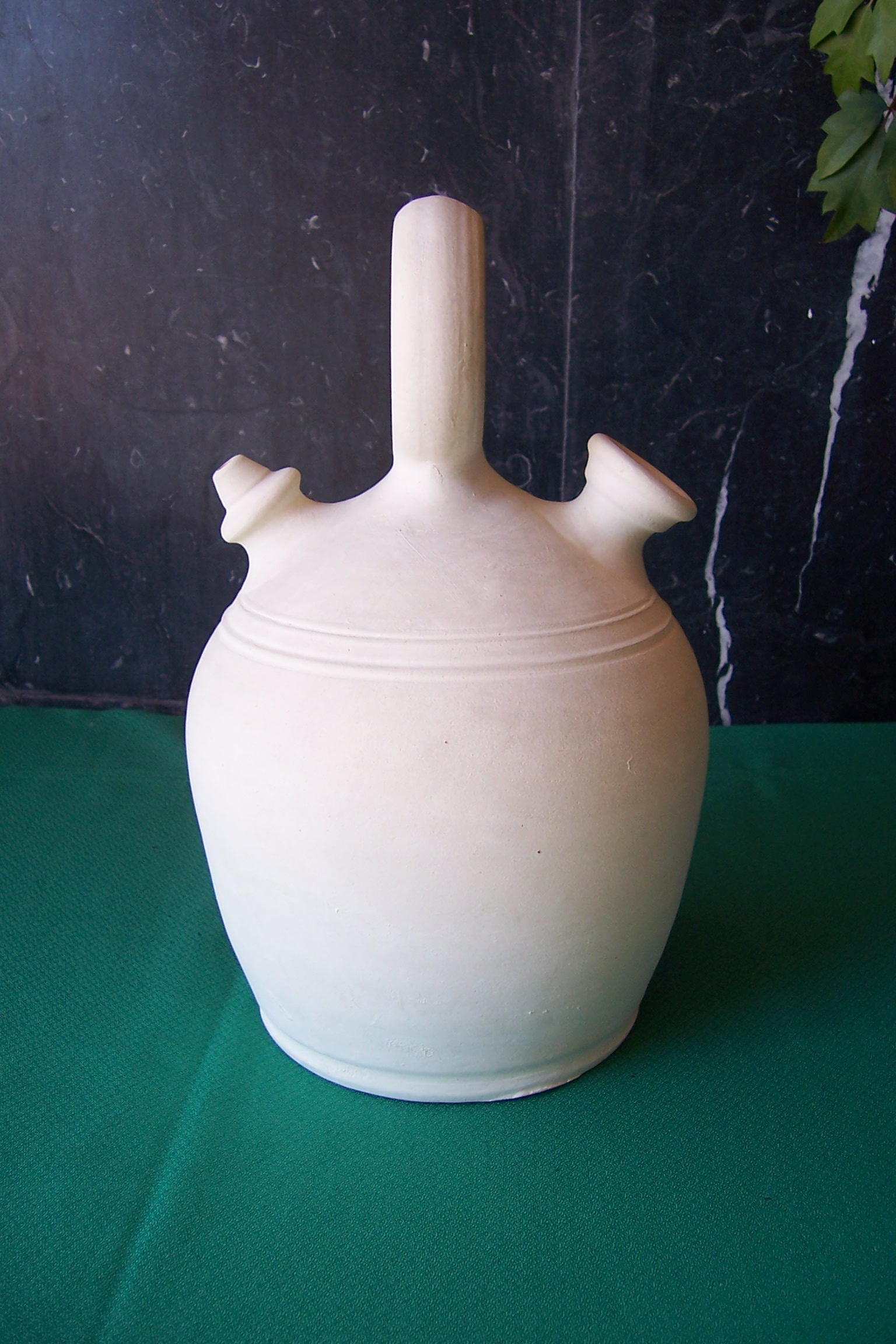
Story of a Botijo


El último curso de Reválida que di en la Escuela Oficial de Idiomas (1988-89) lo recuerdo muy gratamente. Eran todos alumnos y alumnas geniales y más que alumnos eran amigos. Entre los más distinguidos, se encontraban Bernardo Serrano y Cristóbal Contreras, dos pastores evangélicos, con los que sigo manteniendo una buena amistad. 
Fue un curso en el que se publicaron varias historias mías en Sur in English y, con este motivo, yo animaba a mis alumnos a que escribieran sus propios relatos. Bernardo, autor de varios libros superinteresantes sobre temas religiosos, editados en Publidisa, fue uno de los que aceptó el reto y escribió una divertida historia sobre algo que le ocurrió en un viaje a  Canadá, adonde había ido invitado, como representante español, a tomar parte en el Congreso Internacional Evangélico Anual, celebrado en Montreal, seguido de un tour de conferencias por todo el país. Hoy comparto con vosotros su relato, que  fue aceptado para su publicación en Sur in English y que espero sea de vuestro agrado:

Story of a Botijo

The days before my journey caused me great excitement. Shopping  everywhere. A suitcase here,  a bag there, and souvenirs, lots of souvenirs. As the day was nearing I became more and more nervous, after all it is not every day that one goes overseas. The sixth of May was a red-letter day for me;  that was the date of my first trip to Canada.

I had received a formal invitation from a group of around 600 women to be their guest lecturer representing Spain that year, and of course my aim was to put the national flag as high as it could be.

I can still remember the sidelong glance of the shop assistant when I asked her for 45 fans and some castanets, as well as 30 Toledan paper knives... what would be more typical than those Spanish presents! —and I had to visit at least 60 different places in my 45-day stay in the Maple Leaf Country—. Little did I imagine that all my hostesses had already two Spanish fans, a pair of castanets and several Toledan letter knives. Definitely, I wasn't original at all.

For my beloved friend Mart I had decided to buy a glazed «botijo», as I knew he was keen to have one, since his last visit to my town in summertime, when he received a good cold water shower when drinking from a «botijo», trying to learn how to manage it.

At the airport

I went with my family and friends, who had come to see me off, to drink a cup of coffee in the bar at the International Airport, and Goodness! how expensive can 18 coffees at an Airport bar be! No sooner had I paid than I said loudly: «Friends, we have come here only three times: the first one, the last one and the only one!». Laughing and joking we left the bar talking about the rip off we had fallen victims to.

The loudspeakers announced «Passengers on Iberia flight 197 to Montreal, please go to gate number three», and there I was —smothered with kisses by my fans— with butterflies in my stomach and going through passenger control.

My wife, my little son, my mother-in-law, my father-in- law, my sisters-in-law, my brothers-in-law, and all the «in-laws» in the World were there! and  they began to wave their handkerchiefs saying «Goodbye» while some of them only stared at me as if I were the «Indiana Jones» of the group, ready to slide into a thousand adventures. Smiling to myself I thought «it seems as if I were off to the III World War» and waving my hand as best as I could — I was carrying a bag, a briefcase and a beautiful glazed «botijo» to Mart, my friend— I said «Bye» to all my friends and relatives.

Nothing happened when I dropped the briefcase and the bag into the conveyor belt and the metal detector, but as soon as I placed my friend's «botijo» I could notice some policemen getting hot under the collar and I could see how they kept looking at me out of the corner of their eyes. The «smartest» of them, took up my «botijo» and looking inside through the holes asked me with a doubtful gesture: «What is this?». Then, with an elaborate indifference I answered: «A botijo». However, I must admit that it might not be too common to carry a «botijo» from Spain to Canada, however much my friend Mart would appreciate it.

I put all my documents in order... where have I left my passport?.. and I went through the customs and then to the runway. Behind me I left relatives and friends while in front of me an Adventure World opened its doors for me. For a moment I felt almost like bursting into tears, but secretly I rejoiced at having 45 days to myself ahead.

On flight

The 747 of Iberia looked huge. The air hostesses gave us a warm welcome showing a toothpaste commercial smile, smiles that turned icy as soon as they looked at me and my «botijo» —glazed, very nice - on board.

To an ordinary Spaniard, not used to travelling in «Jumbos» it is a real adventure to go on one of them. Comfortable armchairs that can be changed into beds, an up-to-date decoration and lots of cinema screens, yes, a lot of them, one for each forty seats.

With my non-existent experience in transcontinental flights, I searched for my seat, praying that my number wouldn't be a first row one in front of the screen. 38C, 40C... «next aisle» —pointed to me a Colgate's representative— and 42C!, that's mine! Speaking in a whisper I told myself: «Jinxed! There's a jinx on me». My first transoceanic flight and I got the corner seat in the first row! The crick in my neck was now assured! And, to cap it all, I still had the problem of my «botijo». It was obvious that the Boeing 747 designer never foresaw that a Spaniard could be capable of such stupidity as taking a «botijo» to the New World; if he had, he would have placed some hooks in the aeroplane to hang those «country fridges» as people in my town call them. If I placed it under the seat, it could roll and finally break, it was also dangerous to put it in the upper part over the seat because it could drop and break as well. I kept asking myself about it, realizing that I was making myself ridiculous —and Spaniards have a terrible sense of ridicule—. How foolish of me to buy a «botijo» for Mart!

In my despair, «Miss Colgate —one of the kind hostesses— came to my rescue and, keeping her fresh smile, suggested that I take my precious burden to the air hostesses' cloakroom, and hang it there; suggestion that I couldn't refuse; then, giving her my «botijo» I rushed to my seat and I got ready for the flight.

In five minutes we were flying over Malaga and ten minutes later we had all the air hostesses imparting through mimicry the way to use the life belts, while an off voice gave indications in case of accident. To tell the truth, I thought  that Iberia was the best Spanish Airline... anyway it was the only one...
Three minutes of rest and a hostess proclaimed with a metallic voice: «Press, magazines, «periodicos»...». As I proposed to brush up my English in that journey I asked her for the English press. The girl pointed at the English section to me, and I -owing to that blooming mania of affecting superiority— chose the most uncommon one, a pink coloured one that I had never seen in Spain before, and it turned out to be «The Financial Times»! Rotten luck! And there I was with an intellectual pose reading pages and pages of the stock market quotations and so on! It never rains but it pours!

The flight was estimated to last 7 hours, but every 20 minutes or so smiling air hostesses kept giving us slippers, peanuts and the «dreaded» orange juice of Iberia, all of them with the yellow and red anagram of the airline. I felt uncomfortable with all that coming and going, and on the other hand I couldn't avoid thinking about how my ravishing companion —Mart's «botijo»— would be getting on.

Finally, one hour and a half after taking off the loudspeakers announced the beginning of the movie «The Golden Lake» with Catherine Hepburn and Henry Fonda, which they had both received Oscars for. Then, the sad news: «The price for earphones is two dollars». Oh dear! this Iberia...

Of course, as a typical Spaniard —and I can't still understand why we Spaniards as soon as we go to another country become more mean— I refused the earphone and I endured the whole film reading Katherine and Henry's lips speaking in English. That's brushing up English! An unforgettable experience, never to be repeated!

At twelve o'clock we were served the meal, consisting of a precious tray, orange-coloured -how could it be otherwise?— and some vague colourful stuffs that would gladden anyone's eyes, but hardly fill their stomachs. After having a coffee I decided to pay a visit to my friend, the travelling «botijo». «He» was rather well, because the hostess, foreseeing possible bumps, had wrapped it up with a towel like a turban... then, I came back to my place waiting for my next orange «juices»? -six in all during the trip.

At two o'clock we were informed that in a few minutes a cold supper would be served. Supper?.. Yes, we were getting to Canada and it was 9 pm. It was then that I noticed the time change, which I would be more conscious of in the following days. The smoked salmon and hors d'oeuvres were eaten with relish. One even felt a full up sensation due to two meals in five hours.

From above, Montreal with its «Mont Royale» —which the city took its name from— looked wonderful. We had a smooth landing and then the ordeal started again. Customs! I was carrying a big suitcase, a big briefcase, a big bag, and a «botijo»! A policeman asked me in perfect French: «Quesque vu- vule declare?» —or at least that was what it sounded like to me—. In an extemporized French I told him: «Ye ne parle pa franse, silvuple, English». Courteously he began to speak in a strange English, worse than mine at that time —so bad was his— and then I could hear again the fateful question: «Whatt is thatt?»... As white as a sheet and shaking like a leaf I answered: «A "botijo', for my friend»... «A... whatt?» insisted the official, then, doing my best in English I explained to him that was something you put water in and that in Spain was used to drink from.

I never knew if he believed me or not, but making a sign with his hand he opened to me the gates to Canada. Taking my suitcase, briefcase, bag and and “botijo”  I went through the airport into the Montreal streets, while I said to my travelling companion: «Boy, you have caused me a lot of problems, but finally, here we are! Shudder, Canada!

Bernardo Serrano Gutierrez

22/11/13

El 'blog' de mi madre

El otro día, ordenando papeles, encontré una libreta de mi madre, que hoy podría merecer el calificativo de blog. En esta libreta, escribía mi madre, con su armoniosa escritura inclinada, que entonces llamábamos 'letra inglesa', sobre cualquier tema que le gustara. 

No se trata de ningún diario o cosa parecida. Mi madre, a la que adoraba, tenía como cualquier persona sus penas y alegrías pero, de naturaleza tímida y reservada como era, nunca se le hubiera ocurrido hacerlas públicas. Lo que ponía en su cuaderno eran curiosidades sobre temas de la más diversa índole. Había, por ejemplo,una colección de refranes muy completa, la mayoría, como 'con pan y vino se hace el camino', 'no se hizo la miel para la boca del asno', 'a quien madruga Dios le ayuda', 'no por mucho madrugar amanece más temprano', etc. bastante conocidos, pero algunos de ellos, como 'hijo de mi hija mi nieto es, hijo de mi hijo, no sé si lo es', 'si tu dicha callaras, tu vecino no te envidiara', etc., mucho menos comunes y otros, como 'contra la muerte no hay ley, mata al Papa y mata al Rey', 'mano besa el hombre, que quisiera ver cortada', etc., que yo no había oído en mi vida.

Había también en el cuaderno de mi madre recomendaciones sobre la salud: 'los peligros que entraña el tabaco', 'como prevenir el colesterol', 'recetas para la piel', 'la "cura del limón' 'panacea para la salud', 'las excelencias de la manzana', etc.; sabios consejos sobre la vida y la convivencia: 'reglas del amor conyugal', 'los peligros de criar niños mimados'; divertidas anécdotas, como 'el frailecito y el anticlerical': 'Viajaban los dos, el fraile y el anticlerical, en el mismo departamento de un tren. El anticlerical empezó a burlarse del fraile y le apostrofó: "usted se lo deja decir todo y con ese aire de santurrón, hasta se dejaría apalear". Y para ver si se dejaba le dio un bofetón. El frailecito murmuró: "Dice el Evangelio que si te pegan en la mejilla derecha ofrece la izquierda también. Entonces el frailecito se levantó y habló así a su ofensor: "Hasta aquí, el Evangelio, ahora yo" y, de un directo a la mandíbula, dejó fuera de combate al anticlerical. 

Había también algún que otro chiste, por supuesto totalmente 'blanco':  'La dueña de la casa dice al mayordomo: "Gaspar, advierte a los invitados que después del café les cantaré una romanza". "Ya lo he hecho, señora", "y qué te han dicho?". "Que no tomarán café."; "si tuviera que hacer caso al médico tendría que estar tres meses sin comer", "¿ah sí, pues qué te ha dicho?" "Que le pague la cuenta."; "dime, ¿por qué te sientas en el suelo para ver la televisión?" "Porque para poder comprar el televisor, hemos tenido que vender las sillas."

Tras el fallecimiento de mi madre en 2008, con 98 años, heredé su libreta y leía de vez en cuando, con verdadero gusto, retazos de su 'blog'; y un buen día me encontré entre sus páginas con una poesía que yo había escrito en mi adolescencia (con unos 16 años) y que le había dado para que la leyera. La había guardado y, sin yo saberlo, se tomó la molestia de ponerla en su cuaderno. Yo ya ni me acordaba de estos ripios que había compuesto para consolar a una niña, amiga mía, de un desengaño amoroso. No sé si a mi amiga le gustaron mis versos pero, por lo visto, a mi madre le encantaron. 

Permitidme que los reproduzca en mi blog, en homenaje a su memoria:

Un amor imposible

Te vi y eras una flor que cautivaba
y embriagaba el sentido con su olor,
una pálida rosa delicada, 
que al reflejar en sus pétalos el sol, 
clara y pura, diáfana y cristalina,
encendida en mil tonos de color,
estaba por sencilla tan bonita,
que llenándose mi alma de emoción,
me rendía extasiado a su belleza
 y alababa al Señor que la creó.

Te vi y eras la alegría de tu casa.
Despertabas cual pájaro cantor,
entonando armoniosas melodías
y a los acordes de tu cálida voz,
todos juntos los pájaros cantaban
la misma maravillosa canción.

Me gustaba encontrarme con tus ojos,
que mansos reflejaban tu candor.
Me gustaba escuchar tu risa pura
y al contagio de tu risa reír yo.
Me gustaba en fin verte tan divina,
porque a través de ti llegaba a Dios.

Pero ahora te encuentro tan cambiada,
ya han perdido tus mejillas el color,
ya no saludan nunca a la mañana
los bellos buenos días de tu canción.
Ya no me gustan tus ojos como antes,
porque sólo veo en ellos tu dolor;
y todo por un querer imposible,
que un aciago día te cautivó.
Todo por ese sueño irrealizable,
por esa vana locura de amor.

Mas yo no quiero verte consumida
en el fuego voraz de tu pasión.
Quiero que arranques de tu pecho herido
el amor que tu vida destrozó.
Quiero que cantes al nacer el día
como canta el alegre ruiseñor,
que vuelvan a lucir tus bellos ojos,
confiados, tranquilos y sin temor
y que oiga yo otra vez tu risa fresca
y el olvidado encanto de su son,
como el de aquella niña de alma dulce
y ojos claros, que ganó mi corazón.

14/11/13

Los Álbumes de mi hermano Manolo (actualizado)

A pesar de su reciente publicación, me ha parecido necesario actualizar la entrada 'Los álbumes de mi hermano Manolo' para incluir en ella otra de sus grandes empresas culturales: la Galería de Arte Benedito, regentada en la actualidad por su hija Mª Eugenia:

Confieso que soy un admirador incondicional de mi hermano Manolo.
Manolo es un auténtico mecenas, impulsor, junto con otros malagueños de pro, de proyectos culturales tan ilusionantes para nuestra ciudad, como la Fundación Musical de Málaga, hoy día una espléndida realidad.
Me parece igualmente justo destacar que Manolo fue también el creador de la Galería de Arte Benedito, donde se vienen exponiendo, desde hace más de 25 años, cuadros de pintores tan famosos como Rittwagen, Vicente Romero, Andrés Mérida, Laurentino Martí y otros muchos, cuyas obras quedarán sin duda inmortalizadas para la posteridad en una original colección de pequeños libros de arte, acertadamente comentados por la docta pluma de profesores de la universidad o del mundo de la cultura en general.
Manolo ha sido además el patrocinador de dos editoriales, que publicaron un buen número de libros sobre temas malagueños o relacionados de algún modo con la ciudad de Málaga.
Primero, en la década de los '80, creó y financió la editorial Bobastro, ya desaparecida, que publicó títulos tan atractivos, como Paseo Romántico por la Málaga Comercial, de Julian Sesmero, Consideraciones sobre Omar Ben Hafsun, de Antonio S. Urbaneja, Cafés de Málaga, de Francisco Bejarano Robles (popularmente conocido como 'Paco Percheles') o Ermitas de Málaga. Compendio histórico, de Lisardo Guede, Cronista Diocecesano. 
Posteriormente, en la década de los '90, fundó la Editorial Benedito, que publicó libros tan interesantes como  Fray Alonso de Santo Tomás y la Hacienda El Retiro, de María Isabel de Colosía, José Miguel Morales Folgueras, Joaquín Gil Sanjuán, Teresa Sauret Guerrero y José Antonio del Cañizo, José María de Sancha, de Manuel Olmedo Checa, Real Club Mediterráneo de Málaga, 1873/1998, de Luis Merino Bayona, Amparo Quiles Faz, Carlos Gómez Raggio, et al., Diccionario Cultural del Vino, de Serafín Quero Toribio, Malagueños en la Historia, de Francisco Cabrera Pablos y Manuel Olmedo Checa y Los Gálvez de Macharaviaya, de Mª Isabel Pérez de Colosía, Siro Villas Tinoco, Marion Reder Gadow y José Miguel Morales Folgueras, edición de lujo, bilingüe, con una carta comendatoria de S.M. el rey Don Juan Carlos. Tuve el honor de traducir al inglés este maravilloso libro, que fue presentado en varias universidades norteamericanas y en la Hispanic Society de Nueva York.
Pero son los álbumes de Manolo lo que más me llama la atención y lo que en realidad constituye el objeto hoy de esta entrada en mi blog. 
Los álbumes son colecciones primorosamente encuadernadas de recortes de periódicos, revistas, etc., con multitud de grabados, dibujos y fotografías, acompañado todo ello por jugosos e ingeniosos comentarios de mi hermano. Algunos de estos álbumes recogen sus preferencias sobre diversos temas: escritores, músicos, cuadros, esculturas, refranes, chistes, etc., pero a mí los que más me cautivan son los tres siguientes.
Ideotramas, palabra inventada por Manolo, que él define como "imágenes que reflejan ideas entrelazadas entre sí, formando una secuencia literaria",
El Hombre en su Momento, reflexiones sobre momentos determinados de la vida del hombre sobre la tierra, en los que "parece pararse el tiempo para marcar un hito en el devenir de la historia", y 
La Vida Fotografiada, mi álbum favorito, magnífica selección de fotos (más de 700) de sucesos acaecidos en todo el mundo a lo largo de los años '50 que, en su conjunto, constituyen un valiosísimo documento gráfico de esta época de posguerra, tan llena de incertidumbre y esperanza.  En sus 365 páginas, una por cada día del año, Manolo ha sabido plasmar de manera magistral,  en cada instantánea, los aspectos más relevantes de la vida y la muerte, la rica gama de sentimientos humanos: el amor y el odio, lo sublime y lo banal, la riqueza y la miseria, el heroísmo y la cobardía, el triunfo y el ridículo, la alegría y la tristeza, la humildad y la soberbia, la piedad y la crueldad, el deseo, la indiferencia, los sueños, la solidaridad, la curiosidad, la coquetería, la inocencia, la seducción, la amistad, la soledad...
Para redondear su originalidad, en el álbum se recogen más de 400 comentarios de otras tantas personas que lo visitaron y a las que Manolo invitó a agregar un comentario a una sola foto que le llamara especialmente la atención. Yo fui uno de los elegidos y, en mi visita, en mayo de 1959, a mi hermano en Troisdorf (Alemania), donde entonces residía, por imperativos de su trabajo, escogí una foto del gran físico aleman Albert Einstein, fallecido en Princeton, New Jersey, en abril de 1955, para dejar mi comentario. Sin que la poesía sea en absoluto una de mis virtudes, escribí a vuelapluma, de manera totalmente espontánea, con la osadía que me daban mis entonces 22 años, los siguientes versos, dedicados a este gran sabio, cuyas brillantes investigaciones científicas condujeron, lamentablemente, a la fabricación de la primera bomba atómica:
Veo tu rostro entristecido
Una duda amarga reflejar.
Acaso en tu tumba te preguntas
Si has obrado bien u obrado mal,
Si tu ingenio a la paz habrá servido
O al daño de la guerra aumentar.
....................................................
Duerme en tu tumba tranquilo, Einstein,
Deja a tu conciencia reposar.
Si el hombre el mensaje de tu ciencia
No ha sabido bien interpretar,
No has de ser tú quien responda,
No, responderá la humanidad.

En más de una ocasión, he animado a Manolo a publicar La Vida Fotografiada y algún otro de sus álbumes, como Ideotramas o El Hombre en su Momento, que serían sin duda de indudable interés para el ´lector curioso, pero siempre se ha negado, argumentando que, aunque no le importa compartirlos con su familia y amigos más cercanos, él concibe sus álbumes como 'terreno' privado donde 'plantar' sus comentarios personales y sentimientos más íntimos sobre la vida.
No quisiera terminar esta entrada sin mencionar, siquiera sea de pasada, otra muestra reciente de la inquietud cultural de mi hermano Manolo. Se trata de la Vinoteca Patio de Beatas, asentada sobre tres casas señoriales de los siglos XVII-XIX, fielmente rehabilitadas, en la calle que le da nombre, donde se puede comer a gusto, degustando excelentes vinos cualquier día de la semana, o asistir a catas organizadas regularmente por su director, Julián Sanjuán. 

13/11/13

Recuerdos de la Escuela Oficial de Idiomas: cartas a Sur in English

Tuve la suerte de dar clase de inglés en la Escuela Oficial de Idiomas de Málaga, desde 1971 a 1989. Guardo recuerdos entrañables de esta etapa de mi vida académica y destacan entre todos ellos los referentes a la Reválida. La Reválida era una prueba que había que superar al final de 5º curso para obtener el Título de la Escuela. La prueba era de nivel bastante alto, similar al Cambridge  Proficiency, y en ella había una parte que incluía verbos frasales. Los verbos frasales eran y son temidos por la mayoría de alumnos de la Escuela por la dificultad que suelen entrañar estas combinaciones de verbos con partícula, ciertamente difíciles de descifrar, si excluimos las de uso más corriente. Algunos alumnos y alumnas incluso escribieron cartas al semanario Sur in English del diario Sur de la capital, para expresar los problemas que tenían en superar la Reválida, por culpa, en buena parte, de estos 'dichosos' Phrasal Verbs. 
Comparto hoy con vosotros una de estas cartas; la que escribió mi distinguida alumna María José Pérez Sánchez, que comenta, en clave de humor, las 'angustias' que tuvo que pasar para aprender tantos verbos frasales, al tiempo que reconoce que acabó por 'cogerles cariño':

Enjoying Phrasal Verbs

Dear Sir,
The other day when I read Mª Luisa Jaume's letter about Phrasal Verbs, it reminded me of my own troubles with them. I know that they can very difficult if you are not used to them, but they can be fun, too. If you have a never-ending list of phrasal verbs to memorize and find that time goes by without getting any results and you begin to nod off because they usually end up being a bore and so on, I'll give you some advice about how to face up to them or stand up to them, if you like.
First, you have to find time to get round to learning them.
Look them through very slowly, in order to find out their basic meanings. After that, take, write, note, jot, put or get them down, with their correspondent meanings in English, and make up a sentence with them, one by one. An important thing: don't give way to depression, phrasal verbs are a very difficult thing to cope with...
Then, see if you are able to remember all the meanings of a verb with one particle; I'll give you an example with take off:
"You can take off your clothes as well as the stain on your dress; if you want to take off a person, you won't probably take your eyes off him, in order to know as much as possible about him. You can go to the doctor's if you want to take off some kilos or perhaps because you have taken off one of your fingers when opening a tin. You can take a day off or take off for the Stadium because the Olympic Games are about to take off...And last but not least: your plane can take off...without you."
Are you beginning to take to them? or you go on thinking that if you come across the one who made up the first phrasal verb, you'd knock him out or perhaps even do him in?
Please, don't let your temper run away with you; I'll let you into a secret: when I have to bone up on a list of phrasal verbs, I usually let out a cry of desperation, but after that, we come together...
O.K., if I've managed to put my ideas across, and you've caught on to them, you will be able to make out the following:
"The other day, a friend of mine wanted to go to a party and was looking for a friend of his age (he is getting on for thirty), because his wife had gone down with flu. He got on to me and tried to get round me by telling me that if I didn't go to the party with him, he would get his own back, and fall out with me, which made me accept (as you can see, he's very good at getting his own way).
Well, when I tried to dress up for the party (it was a Jet Society one), I realised that I had filled out and the dress needed to be let out, which made me flare up!
I laid aside the dress and tried to knock something up, but with such misfortune that I fell down and broke my leg. The first thing I thought was:
"Every cloud has a silver lining, now I have an excuse for not turning up..."
In my opinion, if you've managed to decipher the story above, you can really boast of knowing your phrasal verbs well; you are an expert in and a fan of phrasal verbs.
They haven't any secrets for you.
Yours faithfully
Mª José Pérez Sánchez

Glossary

to go by - pasar (tiempo) 
to nod off - dar una cabezadita, quedarse dormido
to end up being sth - terminar siendo algo
to face/stand up to sth - enfrentarse a algo, plantarle cara
to get around/round to doing sth - ponerse a hacer algo
to look sth through - repasar algo
to find out - averiguar, descubrir
to take/write/note/jot/put sth down - anotar algo
to make sth up - construir algo
to give way to sth - ceder a
to cope with sth - hacer frente a/poder con algo
to take sth off - quitarse (ropa), quitar (mancha), rebajar (kilos), rebanarse (dedo), tomarse (día) libre
not to take your eyes off sb - no dejar de mirar a alguien
to take sb off - imitar a alguien
to take off for - marcharse para
to take off - empezar (evento)
and last but not least - y por último, pero no por ello menos importante
to take off - despegar (avión)
to take to sb/sth - cogerle cariño a algo/alguien
to go on - seguir, continuar
to come across sth/sb - encontrar algo o a alguien por casualidad, toparse con
to make sth up - inventar algo
to knock sb out - noquear a alguien, dejarlo K.O.
to do sb in - matar a alguien
to let your temper run away with you - perder los estribos
to let sb into a secret - contarle/confiarle a alguien un secreto
to bone up on sth - empollarse algo
to let out a cry - soltar un grito
to come together - reconciliarse
to put sth across - explicar algo, hacerse entender
to catch on to sth - comprender algo
to make sth out - descifrar algo
to look for sth/sb - buscar algo/a alguien
to be getting on for - ir para (edad), ir a cumplir (años)
to go down with - coger (enfermedad)
to get on to sb - ponerse en contacto con alguien
to get around/round sb - convencer/persuadir a alguien
to get one's own back - vengarse de alguien
to fall out with sb - pelearse/disgustarse con alguien
to get one's own way - salirse con la suya
to dress up - ponerse de tiros largos
to fill out - engordar
to let sth out - ensanchar (ropa)
to flare up - enfadarse, ponerse hecho una fiera
to lay sth aside - dejar algo a un lado
to knock sth up - improvisar algo
to fall down - caerse
every cloud has a silver lining - no hay mal que por bien no venga
to turn up - presentarse, acudir a algún lugar
to boast of/about sth - presumir de algo.